Monday, July 10, 2006

Got Nukes?

I’m confused about this whole North Korea situation going on right now. As I am sure all of you are aware North Korea tested at least six long range missiles on the 4th of July. Since the testing of these missiles the rhetoric from all countries has been deafening, with the most hostile rhetoric coming from Japan where Japanese officials have called for a debate to see whether a pre-emptive strike on North Korea’s missile bases violates Japan’s constitution.

Now I understand the argument that is made concerning North Korea and Iran possessing nuclear technology and how they could pass on this technology to the so called “terrorists”. Even so I have yet to see one news report of this actually occurring, unless someone out there knows something or has seen something that I haven’t. Yet we still label North Korea and Iran as two of the greatest threats facing our national security at the moment.

Now compare this stance in U.S. foreign policy to the stance we have taken with our so called “allies” in Pakistan. Thanks in large part to Pakistan’s nuclear ambitions they have started a brand new nuclear arms race with India. India just this weekend tested a nuclear-capable ballistic missile with a range that would make a nuclear strike against China possible. Back in 1998 the U.S. imposed temporary sanctions against India for nuclear testing, but I am guessing our response to these tests won’t be remotely similar since President Bush recently agreed to share nuclear technology with India.

Brand new nuclear arms races aside it is also well document that A.Q. Khan, the father of Pakistan’s nuclear program, has provided nuclear technology to such “terrorist” states as Libya, Iran and North Korea. And in response to Khan’s admission of providing nuclear technologies to “terrorist” states, General Pervez Musharraf pardoned Khan for any crimes that were committed. And yet according to U.S. policy and our current administration Pakistan is a vital ally in the “war against terror”.

So basically I don’t get it, will someone out here in blogger world please explain to me how the current U.S. policy concerning nuclear non-proliferation is anything more then the one giant hypocrisy that I currently perceive it to be?

See also: What To Do About Iran?

Why Do We Support The Troops?

In view of the ongoing debacle that is the war in Iraq, and the widespread recognition that the war was sold to the American public on a false platform connecting Saddam Hussein to 9/11 and WMDs, one might wonder why Americans have been so consistent and steadfast in their support of the troops. What exactly are we supporting?

One argument that could be made is that we are supporting the norm of civilian control of the military. Although we may think the war unjustified, we accept the power of the president to command the troops. Moreover, we recognize the danger to our liberty and security, and ultimately to our democracy, in openly calling for disobedience on the part of the military. So we stand behind our troops, who are standing behind their civilian commanders. In this way, to support the troops is to support the norm of civilian control of the military, even though we distrust the current form of that control.

So why do we support the troops, and not those whom the troops are supporting, such as the Bush Administration's policies? If we suppose that many alert American citizens recognize that whatever degree of liberty and security they enjoy can only be the outcome of a steady recognition and pursuit of the public good of defending our "homeland" against terrorists, then our support of the troops is based on the recognition of the necessity of helping to forward the common defense so we can hope in turn to avoid a state of insecurity and tyranny. However, since we also recognize that the pursuit of liberty and security also depends on preventing the agents of the state — e.g., Bush, Rumsfeld, et. al. — from coercing the American people into serving their private ends, we have become deeply suspicious and afraid of our own government, as it has become more opaque and has built up private forces to circumvent public participation and oversight. So while we support our troops to protect us from external threats, our cries to support the troops also seem to be directed against the powerful internal threat that is our government. I suggest we say, then, "support our troops, because only through their success can we hope to maintain our freedom and security against the actions of our own government."

Sunday, July 09, 2006

ITALY WINS

Italy wins the World Cup Final on penalty kicks, perhaps in redemption for the 1994 loss in the Final, also on penalty kicks. The game was marked by some bumbling touches in the first half and several trades in offensive momentum, with Italy seeming to dominate the first half and France by far out-shooting the Italians in the second half.

In overtime the French captain Zidane was sent off for head-butting an Italian player to the ground, off the play. What a way for Zidane to cap his appearances for the French team. It was a move straight out of Street Fighter.

Here in my little town in Wyoming, the half-full bar was dominated by a big screen television and soccer fans. Quite a few homegrown fans cursing and shouting, smatterings of accents Scottish and British, encouragement and disbelief in Spanish, and maybe more. The world's game. It's a cliche, and Tom Powers may try to bastardize it into an ignorant bleating of misdirected American pride, but it is the world's game, and that's a beautiful thing.

Nature as Hobby

"THESE days, the authentic outdoor sporting experience is fast becoming an endangered species," begins an article in The New York Times about a $32 million dollar commerical park for kayaking and rafting under construction near Charlotte, N.C. The article interviews people who all say the same thing: the wonder of nature is lost when humans manufacture nature-like parks for sporting experiences, and without a sense of wonder, people will never get in the habit of preserving "the real thing."

This is a familiar argument. As Bill McKibben notes in his The End of Nature, "Wendell Berry once argued that without a 'fascination' with the wonder of the natural world 'the energy needed for its preservation will never be developed'—that 'there must be a mystique of the rain if we are ever to restore the purity of the rainfall.'" But as the title of McKibben's book suggests, we live in a world disenchanted with nature. This "fascination" no longer exists. "How can there be a mystique of the rain," asks McKibben, "now that every drop—even the drops that fall as snow on the Arctic, even the drops that fall deep in the remaining forest primeval—bears the permanent stamp of man? Having lost its separateness, it loses its special power. Instead of being a category like God—something beyond our control—it is now a category like the defense budget or the minimum wage, a problem we must work out. This in itself changes its meaning completely, and changes our reaction to it." This view of nature is such a part of our beliefs and actions that we hardly think twice when we hear Al Gore explain the pervasive effects of human-induced Global Warming on the globe, and how humans can conduct themselves in relation to nature so as to reverse this problem. The power of Al Gore's "slide show" to incite efforts to save our global environment presupposes not wonder of the natural world, but the power of man over that world. To be sure, Gore begins and ends his movie with moments of meditation on the splendors of nature, but these moments are subordinate to the emphasis he places on how much we understand about nature and man's influence upon it.

Gore's strategy and the NYT article alike reflect the reality that nature has become with us not a mystical thing encompassing our every action, but something of the nature of a hobby. As McKibben observes, “Nature has become a hobby with us. One person enjoys the outdoors, another likes cooking, a third favors breaking into military computers over his phone line….We have become in rapid order a people whose conscious need for nature is superficial.” This suggests that if real and widespread action is to be taken to counteract Global Warming, a major shift is needed in the way we perceive and conceptualize nature. Otherwise, as the Piedpiper quipped in a pessimistically honest way, the only people Gore will persuade are those who already believed in him and his cause long before they saw the movie. I fear that by presenting his concern with nature as his hobby, Gore only reinforces the very worldview that has lead us into this mess in the first place. But I hope I'm wrong.

Friday, July 07, 2006

Pie-Eyed Poll

Yes, I voted for myself. It is the first vote I "received" and likely the last. But let it be known, that there are some fellow contributors that are either too dumb, slow, or "honorable" to have voted for themselves and are thus at 0 votes. You know who you are.

The King of Pop

In the review of a new book analyzing the life and times of the ever interesting Michael Jackson, Andrew O'Hagan recounts some of his more famous nicknames: "the Gloved One, the Baby Dangler, or the Prince of Pop, as he’s still sometimes known." I think it necessary to add "The King of Pop" to that list. After all, as O'Hagan himself notes, Jackson's Thriller "became the biggest-selling album of all time (fifty million sales, plus seven Top Ten singles)." Let it be said that so talented a performer, Michael Jackson, lacked nothing to reign save the Kingdom of Pop.

Thursday, July 06, 2006

Awful Talk Radio

Host: "Today we're here to talk an awful lot about Iraq, that awful place to be. Who do we have on the phones? Mr. Awful, you have an awful lot on your mind?"

Mr. Awful: "I just wanted to say how awful this is, I mean, people are dying unnecessarily, its awful, absolutely awful."

Host: "Thanks Mr. Awful. I know, we've heard an awful lot about Iraq, especially after the awful events of late, and we're at the point where we can't deny the awful truth about the awful conditions over there. This is, this is, awful, just awful. People just don't understand this."

Tuesday, July 04, 2006

Back from Nature

Humans are highly unnatural creatures. We tend to forget this fact. We are highly unnatural in the sense that we are conditioned by society and the historical circumstances in which we find ourselves. Birds and trees and other creatures of nature are not conditioned in this way. Whereas nature has no control over its own history, humans do. As Feuerbach wrote in his Theses on the Reform of Philosophy, in a line that resonated with Marx, "Man as a being sprung from nature is a creature of nature, not a man. Man is the product of man, of culture, of history."

Though the human essence is determined and expressed through man's social relations, man is nonetheless in some sense a creature of nature. People have always felt a peculiar sensation when they have spent days among forests and lakes. There is something invigorating about it; something that ever inspires reflection and wonder.

For me, time spent in the woods of northern Minnesota (yes, in a modern, well-stocked cabin), reminds me of the primordial fact that everything humans make requires a tremendous amount of work and activity, which depends upon community. Nature has to be constantly worked on to make way for the trappings of human society. In a sparsely populated area, it is easier to observe the fact that people are sustained by their relations with other people, by cultural activities and rituals, and the memory of times past; in the woods, utter solitude can be death to man, can sap the humanness from him. Nature is a relentless process indifferent to the concerns of humans. Humans cannot live by nature alone.

Independence Day

I would like to take the flag back; to take it away from the progressives, take it away from the conservatives; take it away from the television news anchors and commentators; take it away from the makers of magnets for automobile exteriors, take it away from Wal-Mart and Target.

I would like to take it away and let Marvin Hoffman give it back, in words from his 1996 memoir "Chasing Hellhounds," which describes the evolution of a teacher bouncing between one-room schoolhouses and inner-city jungles. He writes from a small town in New England:

"We tried to remember to run the flag up the flagpole every morning, and on the days we forgot, someone from the VFW called to remind us. This was a community that took its patriotism seriously. Although Memorial Day was a school holiday, every teacher and almost every student assembled on the school porch to be issued an American flag mounted on a thin dowel, retrieved from basement storage. Somehow, here, close to the source of the original impulse, patriotism felt more like an affirmation, a giving of thanks, than a mean-spirited nose thumbing at a threatening outside world."

We can't forget the past and we can't ignore the present, but I think Hoffman reminds us of another side of things that can too easily slip away.

Friday, June 30, 2006

Thursday, June 29, 2006

Pawlenty & Higher Ed: Merits vs. Politics

Some time ago, our esteemed contributor Xtra commented under my Economic World Cup post about providing incentives for college students to study math and science as a way to improve American competitiveness in the global economy. I've been meaning to revisit the subject, and lo and behold, your favorite governor and mine, Teflon Tim Pawlenty has opened the pathway to such a discussion.

This week, Teflon Tim announced a proposal that would offer two years of free tuition at the University of Minnesota, or other colleges in the MnSCU system, to students in the top 25% of their class and come from families making less than $150,000 a year. Students receiving the assistance must attend full-time and maintain a B-average, and students are eligible to attain two more years of free tuition if they major in math or a science. The rationale behind this is purported that it would keep Minnesota's best and brightest in-state while boosting our enrollment in math and science.

Politics aside, this is worthy start. This being a politically-charged election year, however, I think we must examine the proposal both on the merits and on its political nature.

Merits

On its face, Pawlenty's proposal fulfills, or seems as though it would fulfill, the objectives set forth in my previous post. We need an increasing number of young people who are trained and can work in math and science fields, and who are educated with an eye toward America's (and Minnesota's) global competitiveness. It seems both reasonable and fair; it targets mostly middle- and low-income students; it offers incentives to study math or science.

Detractors (including Brian Melendez, DFL state party chair) have claimed that the proposal gives unfair advantage to those students already doing well, while leaving others behind. Call me elitist, but I don't see a huge problem with that. If we are to do anything, it is encourage and reward those who perform. Unfortunately, however, we do not have an secondary education system set up to provide a level playing field. For example, Minnesota ranks near the bottom of states in African-American graduation rate (a dismal 44 percent), while posting one of the highest overal graduation rates in the country. Therefore, not all of the kids who could potentially achieve status within the top 25 percent of their class are afforded that opportunity based on our malnourished schools, which are primarily based in Minneapolis/St. Paul, but also exist throughout rural Minnesota. Ultimately, the bulk of students that will be able to take advantage of this proposal are those in property-tax-rich municipalities, located primarily throughout the inner- and outer-ring suburban school districts. Without investment in quality secondary education, this proposal unduly rewards those who already have the advantages of a high-performance education. But, I do agree, that this is a good starting point for further discussion on that subject.

The additional math and science incentive is another topic. Unfortunately, "math and science" are about as ill-defined subjects as one can find on a college campus. Is leisure studies a "science"? Is nursing? Is dental hygiene? The question is: Where do we draw the boundaries? Math and science are terms of art that can fit practically any individual definition. Also, who will decide what math and science are? The governor? Legislators? Educators? We don't know...

Another question here is why just math and science? I think the aim should instead point toward the goals of improving Minnesota's competitiveness on a global scale, and preparing (many) students for the economy of the present and future. This does not mean only providing incentives to math and science majors, but rewarding future educators who will instruct and develop the economic leaders of the next generation. Why not provide an additional two free years to education majors? What about areas of the local economy where there are shortages, such as in nursing?

There is also the matter of private colleges and universities that award a full 25 percent of all the bachelor's degrees in Minnesota. Students attending those institutions are left out in the cold as well.

Politics

No matter what the merits of this proposal, the real story here is in the politics behind it. I have to hand it to Teflon Tim; this was an incredibly shrewd move that has put his most likely opponent, Mike Hatch, on his heels fresh after his DFL endorsement.

The beauty of this move is that is completely deflates the legitimate point that Teflon Tim has moved the state backward in higher education. He has overseen the largest increases in state college tuition, hiked student fees, and has ignored faculty salaries. And now, with a Jedi wave of the hand, he can deflect all of that criticism with this proposal.

And what's better, he doesn't actually have to do anything with it. This is less than a campaign promise, it's merely words. Teflon Tim comes off looking like a moderate (even David Strom, Grand Poobah of the MN Taxpayer's League is in a huff over this thing) and if he does win re-election, he won't actually have to follow through on it. Why? Two likely scenarios:
  1. Democrats retain the State Senate and win a majority in the State House. They follow up on Pawlenty's proposal, and make amendments to it similar to what I described above. The proposal passes and goes to Teflon Tim's desk. He refuses to sign it, because the DFL has "distorted" his intent and it's no longer fit for the state. Period. End of discussion.
  2. Democrats retain the State Senate and Republican retain a majority in the State House. The proposal passes with amendments similar to my descriptions above. But, the proposal fails in the State House because Dr. No Phil Krinkie and his Zero-Tax Clan tie it up in committee, the necessary Republican votes do not materialize on the floor, or the proposal is gutted in a conference committee.

As a result, the criticism for not seeing the proposal through slides right off Teflon Tim and sticks somewhere else. Timmy gets a winning campaign message, and no blame when it blows up after the election. I'm awestruck.

The other question I'd like to ask here is: Why doesn't the DFL ever make proposals like this sooner? Instead, we fritter around with code words - health care, education - but we rarely present voters with something concrete. Is it fear? Are we inept? My suggestion and my hope is that Hatch comes out with something bold - most likely something to do with health care since that's the feather in his cap - and run with it. We need to beat Pawlenty back or else he'll run roughshod right over us with his folksy Minnesota smile and his in-the-closet extremism.

Israel in Gaza: Hamas under Assault

I'm reluctant to take sides in this conflict, which is looking more and more like a war. As the NYT notes in today's editoral, "Hamas Provokes a Fight," even though Hamas is responsible for this violence, Israel's arrest of many high ranking Hamas officials is "unsettling." Neither side is innocent. We should recall what Hannah Arendt teaches us about politics. She concludes her book, Eichmann in Jerusalem, with the following verdict on Eichmann's actions:

For politics is not like the nursery; in politics obedience and support are the same. And just as you supported and carried out a policy of not wanting to share the earth with the Jewish people and the people of a number of other nations—as though you and your superiors had any right to determine who should and who should not inhabit the world—we find that no one, that is, no member of the human race, can be expected to want to share the earth with you. This is the reason, and the only reason, you must hang.

Tuesday, June 27, 2006

PeP @ 20,000

Primarily as an excuse to re-use this graphic of the pat-yourself-on-the-back machine (which is certifiably stamped with the Pie-Eyed Seal of Approval), I think it fitting to mention the fact that PeP Nation has jettisoned us to more than 20,000 hits! (Remember, it was not too long ago that we sputtered away at 10,000.) Never mind the fact that most of those hits came from the PeP contributors themselves...some of those hits had to come from other people. Right? Right?

(For a nice little recap of some of the PeP's greatest hits...click here.)

Wal Mart: the Great Debate

Follow this link: http://www.slate.com/id/2144517/entry/2144521/

It features a debate on the merits of Wal Mart between Barbara Ehrenreich and Jason Furman. Most of the readers/contributors of this blog are probably aware of Ehrenreich (sharing her dismal views) but Furman is a sharp guy. Part of the Clinton economic horde.

Monday, June 26, 2006

Got Wedding Blog?

Nothing says romance like a wedding blog. I can already hear the echoes of the imaginary conversations between the two bloggers, across each other's cyberspace, and between them and their "readers." I'll wait for the book-length account of the whole affair, which is probably also forthcoming under the title, How Pieper Got Out of New Prague, Got Kissed and Got Engaged.

Warren Buffett: 'Wildly Generous Bigot'?

The news of multibillionaire Warren Buffett's graduated donation of more than $1 billion a year to the Bill and Melinda Gates Foundation (as well as four others) really struck a chord with me, particularly in light of Xtra's expressed dislike of generosity.

What stuck out the most was the description during the news conference of Buffett's and the Gates's philosophy on wealth. Essentially, the three agreed that accumulated wealth ought to be shared with society. Rather than going to his grave in a coffin filled with $1 million bills (?), Buffett has ensured a lasting legacy through the work of his chosen foundations and in the lives of the millions of people he is helping.

The beauty of this gift, however, is not the sheer size of it, nor the causes it's going to. It is simply the fact that it is (by all accounts) genuine. This gift is not made as a corporate tax write-off, or for personal or political gain. It is merely a donation to concepts that work, with the primary concept that it takes money to make things like global health and education initiatives work. Warren Buffett, the iconoclastic investor, is showing the world where true investment lies, which is in humanity.

And now, before Xtra and 'Dingo can accuse me of weepiness, I depart.

Friday, June 23, 2006

Did somebody say.....Chevrolet?


Maybe it's just me, but the advertising on the Strib's homepage is a little ridiculous.

And yes, this is exactly how I'm coming off hiatus.

Was Kanye Wrong?

According to research recently conducted by Stanford University professor Shanto Iyengar Republicans don't hate black people, they are just cheap. What about Democrats you ask? They are bigots, wildly generous bigots. There is nothing I dislike more than generosity.

HTML Bleg

To our vast readership:

I am in the process of lobbying the resident gatekeepers, ergh, Administrators (PiedPieper and Mandingo) to incorporate an interactive side bar or something of the like. Pied has ignored me entirely and Mandingo has pleaded html ignorance. Thus, if anybody knows anything about html (can html be a verb?, Ill, a new topic/excuse to post picture of hot woman) please help me improve your blogging experience by posting your related knowledge on the subject in the comments section of this post.

Best regards,

Xtra

A Man of Means by No Means

Incentives matter and ultimately Governments incentivize certain types of lifestyles, tacitly rewarding those lifestyles. This is a long winded way of making me rethink the concept of means testing (as it relates to such entitlement programs as Social Security and Medicare, not Medicaid) and the extent to which it fails to achieve horizontal equity.

My father is keen on telling people that my brother and I represent a perfect balance: he saves everything, I spend everything. My brother is famously cheap; he squeezes every penny till it screams. And, alas, I am a spendthrift. Fast forward to retirement age, in all likelihood, my bro’ will have a much more secure retirement unless knight ridder decides to buy the blog (even then, my contributions have to rank in the bottom quarter with our resident master of the proverbial wet bag of shit-‘dingo), even assuming equal earnings.

Means testing typically looks at one’s means or revenue or income—however you want to call it—in the period when a person is receiving the benefits. As one gets older, or more specifically, when one retires, their income is no longer labor income but rather capital or asset income (i.e. interest and drawdowns from your 401 k or IRA). If you reduce one’s benefits (that they were taxed for in the first place), due to significant asset accumulation, while maintaining the benefits for someone with equivalent lifetime earnings, you are effectively taxing thrift. Capital income at the time of one’s retirement should not be the basis for benefits, but rather lifetime earnings.

When adjectives become . . . commodities

I've been searching for a word or an explanation for the following retail phenomenon. For example, books make good gifts. Seizing on this fact, some book stores now have sections where they sell "gift books." Another example: tattered jeans. Seizing on the fashionableness of such jeans, jeans are now made and sold as "tattered jeans." Adjective. Noun. Product.

In both examples, what used to be made by individual gestures and uses - books into gifts, jeans into tatters - is presented as pre-made and sold as a special kind of product. What is going on here?

Thursday, June 22, 2006

The Argument for Moral Superiority in War

In two recent pieces in The New York Times, Haim Watzman's op-ed, "Hiding Behind the Enemy," and A.O. Scott's review of "The Road to Guantanamo," the authors lament the lapse of adherence to now accepted moral norms in times of war. A.O. Scott points to the abuse of prisoners in Guantanamo as a shameful practice that "squanders a crucial strategic advantage in the fight against terrorism, namely the moral superiority of liberal democracy to the nihilism and extremism that oppose it." Watzman, similarly, argues that rather than elide morality, commanders should enforce it because "It is an element of an army's strength. . . . An army that does not take risks will be easily beaten by an opponent that does." Both statements are underpinned by two assumptions—first, that democracies should behave morally in war, and second, that the moral high ground is a valuable vantage point in war, especially in an asymmetric one between state and non-state insurgent actors.

Is any of this true? Neither Scott nor Watzman marshal any historical evidence to prove this. In fact, if we examine A.O. Scott's argument, we see that what he laments as a strategic blunder is not the reality of Guantanamo, but rather the fact that this reality has been made so easy for all to see, that the quasi-documentary about it "may already have lost the power to shock." The point implicit here is that the appearance of morality is what is important, not the actual following of it. What people believe is going on is more important than what is actually going on. In war, as in politics, public opinion and appearances are the only reality that counts. In Guantanamo, then, the U.S. has lost a strategic asset in failing to be recognized as the morally superior country in the war against terrorism.

The truth here is one that Niccolo Machiavelli, author of The Prince and The Art of War, knew very well. It is not only not necessary to follow what people generally hold to be morally good, but in many cases what is called good will lead to ruin in enterprises such as war. So a prudent army captain should always make it appear that his troops behave well, while in reality doing whatever is necessary to win. As Machiavelli wrote in one of his most famous lines, "For a man who wants to make a profession of good in all regards must come to ruin among so many who are not good." In other words, pace Scott and Watzman, there is no strategic advantage in imposing on one's army "moral" rules that only put soldiers' lives in jeopardy. But this must be emphasized to avoid confusion: this is not to say that there is not an advantage in appearing to follow morality, and that armies should follow it whenever possible. It is to say that morality carries no intrinsic or absolute value in war. Indeed, the arguments on offer by both Scott and Watzman for adhering to it testify to this fact because they make it an instrument to achieve a strategic advantage. And just like any instrument, when it stops working, you pick up a new one. And in some cases, this, lamentably, will be torture and the like.

Late-night Cliffhanger: The Advertisement

MEETING THE CHALLENGE OF A DYSTOPIAN FUTURE

She had wandered back into town to find a candle or die. So odd to her: this one door, with the light on. Light always filled her with delight, or at least the pictures of it.

A male voice-over intones, "By 2500, America's Information Age will be no more. The affairs of our specious will be conducted in darkness."

Nothing is necessary if not candles.
The Lighting Material Solutions Group

Minneapolis ... as Mecca?

While I remain solidly loyal to St. Paul, a city I find far superior to our sister across the River, I cannot help but applaud and stand in amazement at the level of cultural and creative additions that have been made to Minneapolis in the past two years. And I am not alone.
The new Guthrie Theater is lauded as another cultural landmark putting Minneapolis on the map, in the most recent issue of Newsweek. (Click here for a kick-ass Strib special section.) Dubbing Minneapolis "The Design City," Newsweek places it at the forefront of its a list of the top locations in global culture. In addition to the new Guthrie, of course, is the Minneapolis Central Library, a new wing at the Minneapolis Institute of Arts, and last year's unveiling of the Walker Art Center expansion.

Despite all this, I will remain in St. Paul, the fairer city. Yet, bravo, Minneapolis. Bravo!

(And, don't forget, the Guthrie's opening extravaganza is this Sunday...Heiruspecs and POS are playing...)

Late-night cliffhanger: Denouement

She was a neighbor, from an apartment building across the street.

She lives alone, and she had been lying in bed nearly asleep when she heard her back door open, and heavy footsteps on the floor. She didn't have time to reach for her glasses, but she squinted at her doorframe just as a large figure walked down her hall, past her bedroom. She called out "hello?" and didn't get a response. She instantly started to panic; her door had been locked, nobody else had a key, what the hell was somebody doing in her apartment at midnight?

So she bolted. She ran from her room, picked up a heavy object to defend herself (candleholder) and sprinted into the street, where she saw the bright light above my door and instinctually ran for it.

But what if I had been no better? What if it was "out of the frying pan and into the fire?" When I opened my door, we were facing each other at the bottom of a narrow, steep stairway, and I was taller and larger than her.

She looked like she needed to sit down, so I offered her a chair in the front room. I purposefully moved calmly and left my front door open, so she didn't feel trapped in the apartment with me. We called the cops, they came and checked her apartment. A friend of hers - who had a key to check on her plants if she was gone - had come in to crash for the evening, not realizing she was home. No harm, no foul, the cops talked to them both and got it straightened out.

But what about her perception of danger, and her trust in me based on a front door light? It made me think of a report on the local public radio about crime on campus (at a university of 15,000). They had interviews with female dorm residents, who described walking home late at night with keys in hand and cell phone dialed to 9-1. But there have only been a couple - like two or three - random attacks on campus in that situation. Almost all of the violent crime on campus happens between people who know each other, in dorm rooms or similar scenarios. Same thing with "rape myths" - most rapes occur between people who know each other, not in a dark alleyway with a stranger. But which scenario, which attack, do people prepare for?

And what about me? I never really think of "street crime." I left my light on simply to avoid fumbling with my keys.

I live in a town of about 30,000 and bike thefts usually happen in rashes, when some wayward urban youth bring up a van from a nearby big city and steal 100 bikes in one weekend then return and sell 'em. I know quite a few people who leave their cars and homes unlocked. But I've seen quite a few barfights here, and I know of at least one horrific murder in this town.

My wish is - aside from providing a narrative to be parodied - just to provoke your own thoughts on the perception of crime and danger versus the reality.

Wednesday, June 21, 2006

Late-night cliffhanger: Unsolicited Help


As she learned forward towards me I was startled by her tone:
“Why do you have your light on at this hour, have you no love for nature?” she admonished.
I was taken aback, hurt, but ultimately disappointed in myself.

I confessed “I seriously considered turning the light off before I left, but it is so bright and brilliant, as if it were a moon. But this causes me embarrassment to regard something man made as equal to nature’s splendor, and pain when I consider my contribution to nature’s spoilage. I have been considering penance but I am not sure how other Gaea devotees engage in penance”

She was impressed by this display of contrition and his obvious personal devotion to our ecology. His sin was to be forgiven. She pressed her body towards his and brushed her natty dreadlocks away from her face (BTW: the candle is made in Japan and is the byproduct of whale blubber, hypocrite) inviting the Green Cowboy to meet her with his lips. Of a sudden, their moment was destroyed, the candle’s flame made contact with her arm pit hair causing their bodies to be consumed by fire...

Late-night cliffhanger: The set-up

True story: I keep odd hours at work. Last night, I decided to go back in around 9PM for a couple hours. The stairs leading to my front door are narrow and steep, and in the dark it can be quite annoying to fumble with my keys. Thinking ahead to my return later that night, I left the light on above my front door. It's actually a very bright light, as comforting as it is useful.

I returned around 1130PM. I was cleaning up the apartment a bit and about to go hunting for my toothbrush (I just returned from camping, so the essentials are still scattered) when there was a knock at my door. I looked at the clock: 1205AM. The light above my front door was still on; I had weighed the financial and environmental costs of leaving it on even though I was already home (seriously, I did), and decided that for that evening, I was going to enjoy saying to the night-world "I live here!"

Through the glass of my front door I could see a figure leaning in from the narrow stairway, not quite committed to actually standing in front of my door. I was quizzical, but nothing else. I opened the door. There stood a woman in her late twenties, looking frantic and trembling, clutching a candleholder.

O Cruel Mistress, MNSpeak

If the Twin Cities bloggerdom were a mafia family, MNSpeak would be the Don. While serving as a blog itself (although, I must admit, I have never found the conversation as enlightening as that found on the PeP Network) it's most important function is through The Aggregator, a feature that classifies and previews blog posts for 200-odd Minnesota blogs.

MNSpeak, however, has played a cat-and-mouse game with the PeP for much of its stormy history. Sometimes we've been including in The Aggregator, other times we've been left in the cold. It's as if we are courting a fickle lover, one whose heart belongs to no one, yet belongs to everyone. Admittedly, I can understand MNSpeak's neglect during the Pie-Eyed Dark Ages (circa Dec. '05 to April '06), when nary a peep was heard from the PeP. But now, as the Pie-Eyed Picayune has blossomed into a Renaissance, we receive the same treatment. Today, we are included in The Aggregator. Tomorrow, we shan't even contemplate.

Tell us, MNSpeak, what must we do to remain forever in your good graces?

Tuesday, June 20, 2006

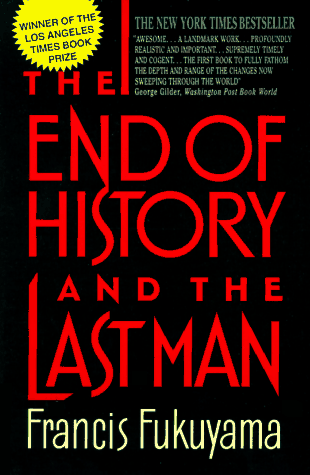
Dowd Zings Fukuyama

"You'd think that incorrectly predicting history is over would get you banished from the intelligentsia forever, but Mr. Fukuyama proffered another big idea, warning that the pendulum was not making its customary swing left because "values" voters were clutching it. "There's a guy I buy my barbecue from who says, 'I think we're in a class war and my class is losing,' " he shared."

Dowd adds, "(Is this The End of Barbecue?)"

Zing!

Biking, Helmets and Risk Assessment

I don't wear a helmet when I ride my bike. Am I crazy? Probably not, but surely many people think I'm being stupid not to wear one. It can't hurt, they say. And it might save my skull.

True enough. But I don't see what makes bicycle riding more dangerous than, say, walking, and we don't think it crazy to go for a walk without wearing a helmet, even though it couldn't hurt. If the danger in biking is that one might fall off, then there is little danger if you are a competent bike rider. If the danger lies in the chances of being hit by a car, then biking is no more dangerous than any other mode of transportation, including walking.

But if we're going to actually get serious about risk assessment and being safe, instead of just exhorting people to wear helmets, then we should discuss every activity and determine what level of risk to one's health is too much to accept. Is skiing too risky? Driving? Flying? Walking? Rock-climbing? Walking at night? You get my point. People die in car accidents all the time, yet we don't think it crazy to ride in one. I think people are nuts to go skiing, yet if they have fun doing it, so much the better for them. I realize that it all depends on how competent one is about these things. There is nothing inherently dangerous about such activities. They only become dangerous when someone really doesn't know what they are doing.

I think people should take the same attitude toward biking. Of course you could fall off and die - but you can also die in a car accident. But many people never get into a car accident because they are defensive drivers, just as many bikers have been riding for years without falling off, and many of these bikers have never worn a helmet.

Chill out people. There are more important things to worry about than helmets.

Let them eat grass...

This past weekend we were driving south out of St. Paul on West 7th/Hwy 5. As we were passing Fort Snelling, we noticed two lonely souls on the bridge carrying signs. One said: "Take Down Fort Snelling!" and the other: "Fort Snelling - Symbol of American Imperialism." Of course, any Minnesotan worth her salt ought to know the conflicted history behind our former frontier military outpost. It was set up to take this land from its American Indian inhabitants, violently if necessary. In a classic bit of American diplomacy, the government "purchased" land Fort Snelling sits on in exchange for guaranteed annuity payments, which the the tribes would rely on to feed themselves. After the military officers in charge failed to make the payments - uttering the famous words, "Let them eat grass..." - a battle ensued, which the tribes lost handily. It was a tragic and despicable chapter in our state's history.

My first thoughts, though, were of the two protesters. In my cynical way, I derided them as fools. This symbol of "American imperialism" is nothing but a museum, a relic of events ocurring a sesquicentennial ago. Yet, reflecting on the lives lost, and the savage treatment human beings were afforded at our own government's hands on soil just a mile or two from where I live, I can't help but wonder if they are to be admired. Some force drove those two people to stand out on a bridge, hold up signs decrying a national and state monument, and advocate for a cause that stands absolutely no chance of going anywhere. They achieved nothing but the inhalation of far too many gas fumes. I simply do not have the passion and wherewithal to face such fruitless and debilitating efforts. Yet, those two people managed to get me to look farther into the history of Fort Snelling than I had before. They managed to make their position stick in my head long enough for me to blog about it. So who, exactly, is the fool here? The protesters or me? Did they, in fact, accomplish an objective?

Monday, June 19, 2006

The Relevance of Libraries

I have to admit: Until recently, I never fully realized the importance of public libraries in our society. Sure, they're great for the kids, and it's nice that people too cheap to buy the Sunday paper pick up one of those newspaper sticks (and, really, are those necessary?), but all in all, I didn't see the big deal.

This changed one rainy Saturday afternoon when my lovely and I visited the St. Paul Central Library downtown. The fact is, libraries in the 21st century are not just about frumpy ladies who shush you at the drop of a dime, but about gathering sources of information and turning that into knowledge.

The question of whether libraries are relevant is certainly valid. It's also prescient, as evident by the impressive new digs of the downtown Minneapolis library and the improved space of the St. Paul Lexington Avenue library (scheduled to open Sept. 9). One can argue that with the wealth of information available through the Web, what need is there for these massive physical structures? If we can store gazillions of gigabytes of data in one relatively small box, what is the point of spending hundreds of millions of dollars on buildings to house them? The answers are both simple and complex.

First, the Web is great at providing information. But that information is neither here nor there without the ability to cite your source (!), prove its authenticity, or delve deeper into the subject. The problem with the Web is that since there is so much information, we can't delineate (in many circumstances) fact from fiction.

Second, the Web (obviously) is not free. Not only must one pay for an Internet connection, one must also pay for the equipment necessary to run that connection, and have the wherewithal to understand how to use, maintain, and update that connection. Libraries, if nothing else, at least provide (through free Internet) access to a world that many people are denied.

Third, the public library of the 21st century, as opposed to the library of the 19th century, is a place not simply for solitary information-gathering. Rather, it is a community space, open and accessible to all, that can be used to advance the pillars of our free society. The perfect example of this is the architecture of the new Minneapolis Central Library. From the moment you walk in the door, you feel connected to the community. Meeting spaces, conversations, educational outreach, civics lessons, citizenship classes, you name it; it's all there. Libraries are not simply stoic monuments of information. They are, and must be in order to survive, organisms that foster discourse and community interaction.

Ok. I'll shush now.

Saturday, June 17, 2006

Busyness

The New York Times over the last few months has run a number of articles on one theme: the unprecedented busyness of our lives. But this busyness, apparently, does not affect us all equally. The Times has focused on privileged college students looking to make it in the professional world by cramming their resume with internship and leadership experiences, and the even more harried individuals they will become once ensconced in that world. "The Lost Summer" (June 4) considers the former, while Sunday's "Pencil It In Under 'Not Happening'" documents the latter, the euphoria felt by the overscheduled, harried professional class when someone calls to cancel - er, "reschedule" - a social obligation.

I've said this to the Pied before, I think "busyness" is a real phenomenon that is worth studying (and is being studied by social scientists and social theorists), and that it has much to do with new technologies (cell phones, email, Internets, etc.) that have profoundly changed the way humans relate to each other nowadays.

However, I have become increasingly skeptical of the idea that such busyness is a new and interesting characteristic only of elite, political, juridical, medical and otherwise professional and highly-educated classes. The phenomenon seems to afflict most ordinary citizens: we're all "busy," if not with doing, at least with thinking and planning. Or rather, we have become accustomed to think that we ourselves and everyone else is so busy — and the NYT has been reinforcing this view.

Why are we so busy? For what purpose? Is it worth it?

Friday, June 16, 2006

The Economic World Cup

Last week, Fareed Zakaria wrote an extended piece in Newsweek that coincided with a series of articles on global leadership and the U.S. position. The comparison Zakaria made is of the U.S. to Great Britain at the end of Queen Victoria's reign, which occurred at the last turn-of-the-century. Great Britain, at that time, was the world's sole superpower, a nation unmatched in its influence and reach, and unparalleled in its technology and military prowess. Yet as the 20th century proved correct, the winds of history have a way of turning even the most dominant empires into dust.

In comparing the U.S. of today to the Great Britain of 100 years ago, Zakaria makes some very valid points, but ultimately does not explore any concrete thesis. First, he goes through all of the ways that the U.S. is going down the tubes. He inevitably trots out statistic after statistic illustrating how the rest of the world is poised to not only overcome the U.S., but leave us in the dust. My favorite happens to be the fact that the U.S. graduated more people in 2006 with sports-exercise degrees than electrical engineering degrees. The bottom line: While the U.S. has higher growth and greater potential than most industrialized countries (such as France, Spain, Germany, and Italy), it will not be able to compete with the hunger, ambition, and sheer volume of intelligence, manpower, and cost-effectiveness of China and India.

Zakaria, however, then goes on to disprove this bottom line by explaining how the U.S. fosters a creative environment, how we have the best universities in the world, and that we have an increasing population, as opposed to the expected declines in other countries. The bottom line here: While the U.S. may fall dramatically behind in all of these numbers, it will never fall that far behind because of its spirit and ingenuity.

Could it be that we're actually doing both? That while our educated classes decline, our fortunes will be buoyed by the environment and nature of the U.S. economy? Well, yes, but under strict contingencies.

First and foremost, education must be a top priority. That blanket statement won't do, though. In order to compete in the world economy we need to determine what the role of the American worker is in that economy. Historically - well, for much of the past century - the traditional role was that of manufacturer. Over the past decade, and certainly in the near future, manufacturing will become nonexistent as a strong player on the national level. Simply put, U.S. workers cannot compete with Chinese, Indian, or Bangladeshi workers in the manufacturing trades. That's not a put-down to U.S. workers. It's the truth. The longer we deny that truth, the slower and more painful the death of U.S. manufacturing will be. Instead of going through that, we need to focus our educational efforts on three fronts: (1) Reeducating workers already in the workforce in innovative ways that will allow them to provide for their families while moving the U.S. forward economically; (2) ensuring that all children in the U.S. are prepared for the economy they will encounter after they graduate from high school; and (3) freeing resources for higher education to become hotbeds of technological, scientific, and other scholarly innovation. This means investing - heavily, in some areas - to earn the dividends on the other side.

The other priority is to remove xenophobic politics from the national scene. A fair, effective, and efficient immigration system - one that not only provides immigrants with the opportunity to live and work in the U.S., but also gives incentives toward citizenship - is absolutely essential if we are to compete with the "rest of the world." While our population may be increasing - certainly a positive sign when compared to our West European brethren - we cannot possibly compete with a couple billion people and change in Southeast Asia. In order to fulfill the promises of a global economy, we have to be a global country. The moment we start to truly regress in our immigration policies is the moment we will start slipping from our status as sole superpower.

I speak in the Spirit of Truth.

Tuesday, June 13, 2006

Minnesota's environment: "nothing less is at stake than everything"

I was accused - amicably - of entering this blog with a manifesto clutched in my earth-stained hands. Dennis Anderson, in his recent Star Tribune article on the status of conservation funding and efforts in Minnesota, brought that manifesto home to the state. He blasted local politicians for ignorance and general mishandling of environmental issues, but some of the harshest criticism was reserved for the weak-kneed approach of some local conservation groups. "Conservation is and always has been a contact sport" and those working to conserve the incredible natural history of Minnesota must be willing to fight as such.

He also called for a wholesale redefinition of conservation in Minnesota, and pointed out that the faults of those in power likely reflect the faults of those whose who voted for them. Indeed, he described a "matrix" of elements in our human society that have lead to both a) the need for conservation efforts and b) the current failures of such efforts.

Anderson closed by saying:

"The challenge, bit by bit, year by year, is to change this matrix - at the Legislature, in publishing and broadcasting, and among Minnesotans at large."

"In the case of the state's lakes, rivers, forests, prairies - and us - nothing less is at stake than everything."

What he described were the symptoms of merely and strictly 'politicizing' environmental awareness. If all those players - senators, representatives, citizens, maybe even the conservation groups - considered and understood our environment in an immediate, personal fashion, before considering and understanding it in a removed, political fashion, Anderson would not have to decry the relegation of conservation in Minnesota.

Monday, June 12, 2006

Suicides at Guantanamo Bay

All societies have a notion of permissible killing. It is unclear, however, what our society believes about suicide. Surely it is a controversial issue. Is suicide ever permissible, and if so, under what conditions and in what ways?

The three suicides at Guantanamo Bay, as a New York Times editorial rightly suggests, were "the inevitable result of creating a netherworld of despair beyond the laws of civilized nations, where men were to be held without any hope of decent treatment, impartial justice or, in so many cases, even eventual release." Reduced to live humanly incredibly inhuman conditions, it is no surprise that these inmates found it more glorious and noble to die by their own hands than to continue to suffer under their captors. We know from the experience of Nazi concentration camps that humans can be made to go willingly to their death. Now we know from Guantanamo Bay, if we didn't already, that under conditions of extreme distress and captivity, where there is no hope for release, humans will decide to take their own life as their only way out.

And it is worth documenting again the perverse reaction to these suicides on the part of the camp commander: "Admiral Harris's response was as appalling as the suicides. 'I believe this was not an act of desperation, but an act of asymmetrical warfare waged against us,' he said. The inmates, he said, 'have no regard for life, neither ours nor their own.'" Under normal circumstances, suicide may be ridiculous. But these aren't normal circumstances. Moreover, a jailer is in no position to accuse his prisoners of morally inappropriate action in trying to escape. And to call these suicides an act of warfare is beyond comprehension.

Regard for life? If anyone has little regard for life it is Admiral Harris, whose remarks show how little consideration and empathy he has for the pathos and extreme anguish of his prisoners lives. However dangerous they may be, they are still human.

Thursday, June 01, 2006

The Misplaced Hippie of Good Fortune is Dead

To the protagonists of the Pie-Eyed Story: I'm in. Pieper talked me into it, and by that I mean he grabbed me by the ear and wrenched me into the room. I have been a loyal reader since the inception, keeping up on Minnesota current events and provoking worldly opinions...and the occasional pile of horse dung (sometimes I go back and read the Bearded Matriarch just for the heck of it).

Back in the day I was the MHOGF. However, a subsequent "haircut and real job" and other life changes convinced me I couldn't assume the name again. What did I come up with? A Green Cowboy. Weak sauce, I know. Truth is, I may be no more green than the average joe. I don't drive a hybrid, I don't belong to Greenpeace, and I have never ridden a 17-foot Zodiac on a suicide mission to foul the prop of a Japanese whaling ship in Antarctic seas. Nor am I a cowboy; in fact, one of the few times I have been on a horse I walked away bow-legged for days. However...I live in the cowboy part of the US and it is my team's mascot. Additionally, there is a lot to say for a "cowboy" approach to life; I have lived a good part of my life outdoors; and yes, once, I did help shoot, skin, and butcher a 900 lb. steer.

As for the title of green, I think Ilya touched on it nicely in his global warming post:

"Our environment will only be adequately protected once it becomes the object of our love, guarded with jealously against those who would despoil it."

I call myself green because I think ecological considerations of our actions must be inherent in everything we do. It's a simple position, but it has striking consequences. It is based on two ideas: 1) We live in, and are entirely dependent upon, nature. 2) Natural systems and organisms have an inalienable right to exist, and an intangible value, both of which must be respected. This in mind, I don't call myself an "environmentalist." That takes ecological considerations out of everyday life and puts them in the arena of politics. That makes concern over the environment a voter issue that belongs to environmentalists and that is only visited by other parties.

Instead, concern over the environment should be present in everything we do, from presidential votes to choosing toothpaste brands. We consider the effects of all of our decisions on our own welfare, it's second-nature. Consideration of the effects on the environment's welfare should be as such. We can't view the environment in a political context - we must view it in a personal context.

Thus, I'm no environmentalist. But I am green.

Wednesday, May 31, 2006

Tommie of the Year reprise

Just when you'd thought St. Thomas's graduation fiasco was over, and you'd heard the last of Ben Kessler, the National Review's Colleen Carroll Campbell issues an apologia for his speech, calling it a defense of Catholic values against the "dictatorship of relativism" and a challenge to "conventional wisdom."

Or I should say,

Just when you'd thought you'd never hear a speech so grandiose and airy, presented as the Absolute Universal Truth, the National Review's Colleen Carroll Campbell out-Tommies the Tommie of the Year Ben Kessler with this piece of cant and untruth.

Nam

Well, I am off to Vietnam for the next couple of weeks where I am going to try and avoid becoming a human carrier for avian flu. Some choice quotes from my doctor as I was getting some last minute prescriptions:

"Vietnam?!?! You couldn't pay me to go down there with all the shit that's coming from there" I believe that was a reference to avian flu, et al.

"Richard, remember, no hoochie coochie"

Off to Socialist Nirvana it is, Cheers!

Tuesday, May 30, 2006

Who's Afraid of Global Warming?

The so-called "controversy" between those who want Intelligent Design to be taught in biology class and those who want science and not religious dogma to be taught, is not unrelated to the brewing war of words over the threat of Global Warming. Some of the same groups who want the Bible taught alongside Darwin are probably also aligned with those who downplay or deny the phenomenon called Global Warming. This is not surprising. Both Darwin's theory of evolution and the theory of Global Warming involve virtually imperceptible changes to our natural habitat over a protracted period of time. As Darwin observed in his Origin of Species, "so imperfect is our view into long past geological ages, that we only see that the forms of life are now different from what they formerly were." However, the key difference between evolution and climate change is that the former is a natural process over which humans have very little influence, whereas the latter is a troublesome reality precisely because we have no one to blame but ourselves for the changes we have wrought on nature. Among scientists, there is no disagreement that increased concentrations of carbon dioxide in the atmosphere means higher temperatures. Like evolution, Global Warming is not a speculative theory, but a verified reality. The question, however, is whether politicians should take this reality seriously.

That the climate has changed, just as species have evolved, is all too evident. This is not news. Nor is it news that humans have altered the earth's atmosphere. What is news is that we can no longer watch reports about Global Warming as merely news, but must do something, must really do something significant, and quickly, before the earth is rendered "inhospitable" to human life, as Bill McKibben continues to warn.

During the last half of the twentieth century, a period characterized by the Cold War, the fear was that the human race would destroy itself directly through a nuclear war or indirectly as a result of the damage such a war would inflict on our environment. This threat remains. We still live in a nuclear age stalked by the threat of nuclear extermination, as Jonathan Schell, author of The Unfinished Twentieth Century, and Robert S. McNamara, former U.S. Secretary of Defense, continue to warn. But the fear of nuclear annihilation has been eclipsed in the public imagination by the fear of Global Warming, the new favorite topic of prophetical fearmongers.

A case in point is Al Gore’s new movie, "An Inconvenient Truth." Unfortunately, it has already created more buzz about Al Gore’s non-existent ambitions to be president than about the "Truth" of its title. As the title indicates, and as Al Gore has insisted repeatedly, the film is a vehicle of Gore the Professor, not Gore the would- and should-be president. Its goal is a moral one: to bring to light inconvenient facts -- inconvenient, that is, for Party platforms. This movie is very much the creation of a man who has made teaching his new vocation. And it will be Gore’s moral achievement if the audience of his movie should come to accustom themselves with the facts, and demand real action from politicians.

I haven't seen the movie, but I’ve read that Gore, like McKibben, suggests that Global Warming, in the not so distant future, may make the world unfit for human habitation. This is an unproductive digression from the inconvenient truth: an attempt not to persuade people to love the environment but to make people fear inaction on the issue. Resort to fear here is an act of desperation, a political weapon in defense of an all but lost cause. This is not a productive way forward, for it provides the opportunity for politicians to appear active by claiming credit for token legislation that fails to change the facts. Our environment will only be adequately protected once it becomes the object of our love, guarded with jealously against those who would despoil it. Until then, let us hope that the apocalyptic fearmongers are wrong. I'm afraid that we believe our hopes more than our fears, and that while we may fear the worse, we will commit to action only on the basis of our hopes for the future.

Saturday, May 27, 2006

Club Donkeyass Part III...or Mandingo as 'The Runaway Groom'

Three pie-eyed cheers to Mandingo and his lovely Queenie who tied the knot last eve in a beautiful ceremony at none other than the University of St. Thomas chapel. For those who weren't there, Mandingo rode into the church on a gallant steed, wearing the finest chain mail of the 14th century. He and his beloved were then tied at the wrists with twine, while showered with garlic cloves to ward off witches and hobgoblins. After a rousing sacrificial offering to the Norse gods, we became merry with ale and other intoxicating spirits. Mandingo and his lady then mounted their fine horse and rode into the sunset to begin their magical quest of lifelong happiness.

hip-hip-hooray.

Hip-Hip-Hooray.

HIP-HIP-HOORAY!

Friday, May 26, 2006

My Pet Peeve

I had never been to a Cold Stone Creamery, which is odd, because Ice Cream is the bane of my existence. I am mildly overweight, those that are less charitable would call me obese. How appropriate, the sole conservative on this blog is fat. Anyhow, that aside, I decided it was time to pop my Cold Stone cherry. As I approached the counter still contemplating the various condiments that would push my obesity to the point of morbidity, I was confronted with what is seemingly a simple question "What size would you like?". Knowing the idiocy of American sizing regimes I looked to the menu to see what was this company's inane translation for medium. I noticed three phrases beside which their respective prices were listed in ascending order: Like It, Love It, and Gotta Have It. And I thought to myself, yes these look to be the potential "sizes" as the prices are listed in ascending order, but they can't really be serious. I was frozen and momentarily unable to complete my order. In the meantime the stupid clerk was getting impatient with me and repeatedly asked me what size I wanted as if it were all so obvious. Finally, I tepidly offered "Love It". And the deed was done and I had my ice cream. And the point of my post, well it there really isn't one except that I belive we should return to the days of small, medium, and large. I go to starbucks and order their coffee (regular, drip, no soy milk or horse jizz or whatever). I ask for a medium, the "barrista" or clerk goes spiraling into conniption fits as if I were ordering in Chinese. Tall, Grande, Venti. That is idiotic, three sizes in three different languages, the first two are hardly distinguishable. Think about it, the appropriate measurement for a liquid is volume, does tall or grande (big) indicate greater volume than the other. And then Venti, it simply means 20 in italian. Is a venti truly 20 ounces? If so kudos to Starbucks but maybe those idiots in Seattle could label their other sizes in a similar fashion. Or at least have all of the sizes in the same language. Better yet, adopt a sizing regime that was once known to Western Civilization before the discovery of the all important self-esteem: small, medium, large.

Thursday, May 25, 2006

Youngsters these days!

I have to hand it to the Old Grey Lady. If the source of that nickname may have been dubious, it no longer is. To wit,
But the line between what is public and what is private is increasingly fuzzy for young people comfortable with broadcasting nearly every aspect of their lives on the Web, posting pictures of their grandmother at graduation next to one of them eating whipped cream off a woman's belly.

The more things change...

Wednesday, May 24, 2006

Some Good Humor

A: Sometimes you miss the forest for the trees.
B: What forest?

Tuesday, May 23, 2006

UST Can’t Even Do Graduation Without Making The Front Page

As some of you may or may not know, last Saturday was commencement weekend at the University of St. Thomas. Which usually means plenty of boring speeches and of course the always enjoyable task of sitting through every single name being called off, but the typical boring graduation ceremony would have been a godsend for UST compared to what occurred instead.

Some of you may have noticed front page stories in both the Star Tribune and the Pioneer Press concerning remarks made by UST’s 2006 Tommie of the Year Award winner at the undergraduate ceremony. Or maybe you saw it on KARE 11, WCCO, or KSTP.

Father Dease, president of UST, offered a statement late yesterday concerning the speech and Ben Kessler the graduate who gave the speech has offered a statement of apology which was included with Dease's statement. But even with his apology there is still a petition movement to strip Kessler of his Tommie Award.

Here is a link to video of the speech where at graduation he called certain faculty members selfish as well as calling everyone who uses birth control selfish. Make sure you pay close attenting to the faculty getting up and leaving, as well as the graduates who are walking out of their own graduation.

After everything that has happened this semester you think the leadership at UST would have done everything possible to keep graduation of all days, as non-eventful as possible, I guess not.
  • Here is another perspective on UST's commencement ceremony from the point of view of a graduate’s family.

Monday, May 15, 2006

Have Your Phone Records Handy


Verizon has been sued for giving the NSA the phone records of millions of Americans. The lawsuit was filed on Saturday just days after USA Today reported Verizon, Bell South and AT&T handed over millions of phone call records to help the government build the world’s largest database, The 1986 Electronic Communications Privacy Act made it illegal for telephone companies and computer service providers to give the government records showing who their customers had dialed or e-mailed. Attorneys say that under the 1986 law the telecoms could be forced to pay out one thousand dollars per violation per customer.

Everyone get your phone records out, President Bush may have just solved the countries economic problems if these lawsuits are allowed to go class action. But of course all of the major phone carriers, except for Qwest, would end up going bankrupt. Oh well seems like a small price to pay for a few thousand bucks each.

Sunday, May 14, 2006

Two Down...Cheney and Bush To Go


It was reported on Saturday by truthout.org’s Jason Leopold that in a meeting Friday with Karl Rove’s lawyers lasting 15 hours, Patrick Fitzgerald served the attorneys with an indictment charging Rove with perjury and lying to investigators. It is not known yet if the expected obstruction of justice charge was included in the indictment.

I haven't seen any coverage of this from any of the major newspapers, but hopefully it is true. So when are President Bush and Vice President Cheney going to be getting their indictments?

Friday, May 12, 2006

EATS: Don't go to Chatterbox II if you want Chatterbox I

There's been a lot of buzz surrounding the new Chatterbox Pub location in St. Paul's Highland Park. My special ladyfriend and I went last night to check it out and compare Chatterbox II to Chatterbox I, a well-loved locale.

First things first: The new Chatterbox is nothing, nothing like the original. Some may think that's a travesty, some may call it a blessing. Personally, I don't see any problem with establishing a new ambience around the same concept. After all, the physical structure itself is not a hole-in-the-wall nestled away in a South Minneapolis neighborhood. It's in a converted Perkins (one of the best Perkins ever, mind you), and smack dab in the middle of a high-traffic commercial area. So if you're looking for, or expecting, Chatterbox I when you walk into Chatterbox II, don't bother.

As for the restaurant itself, both of us gave favorably reviews. We were a bit disoriented walking in, because there was actual natural light in the new joint. Also, there is a family-friendly aspect to the place, at least during the day. The decor is quite reminiscent of Chatterbox II's neighbor the Highland Grille, with futuristic furniture. Of course, you can still order board games at your table; there are a number of casual, comfy looking couches, and there's also original Nintendo on flat-screen TVs. I watched a nine-year-old try to figure out Mario 3 for a few minutes, then left with disgust when he didn't even know to go into one of the mushroom huts.

The food and drinks were classic Chatterbox. I had a delectable Inferno Hellcat Burger on ciabatta with deep-fried pickles and great fries. With a name like Inferno Hellcat, though, I expected some more heat, but alas, that's the problem anywhere in Minnesota. There's a huge bar with a decent selection, including it's own Chatterbox Lager (a fine brew).

All in all, you need to check it out for yourself. It's definitely worth it.

Lasers

"Rather than allow our intelligence professionals to maintain a laser focus on the terrorists, we are once again mired in a debate about what our intelligence community may or may not be doing." -- Rep. Peter Hoekstra, Republican of Michigan, as quoted in today's New York Times

Now, I don't have the intelligence (literally and figuratively) of Rep. Hoekstra, and he may know of some really, really big lasers. But maintaining a program that intends to collect every phone call ever made seems about as precise and laser-focused as killing a sea monkey with a stack of phone books.

Thursday, May 11, 2006

News & Views: Home Stretch Edition

  • So as Stadium Bowl XV stretches into Year 11, the Minnesota House and Senate enter into conference committee and they're only about 2/5 of a light-year away from each other, which considering previous arrangement is actually fairly close. The whole thing is an exercise in ridiculousness and an unfortunate pandering to the electorate for the primary purpose of giving embattled Republican incumbents something to tell folks back home they accomplished without paying for. Hey, I'm all in favor of a new stadium...for the Twins. They're the only ones we would actually be in danger of losing at this point. Vikings aren't going anywhere quite yet; and the Gophers? Come on...
  • The DFL has some more endorsed Congressional candidates. Two sacrificial lambs (Rowley in the 2nd and Wilde in the 3rd) and (maybe) a sure bet in Ellison. I'll let Anti-Everything tell you about the fireworks in the 5th District. Yikes. In other news, all three DFL candidates for governor - Hatch, Lourey, and Kelley - are outpolling Teflon Tim. Of course, it is only May.
  • For Mandingo's sake, I hope the government isn't monitoring 1-900 calls. He'd be "outted" for sure.
  • Hey, guys, did you hear about this body plastination thing at the Science Museum where you can see everyone's innards? Oh, you did? Like a month ago? Get with it, MPR! Oh, and Katherine Kersten ets us know that the bodies are dead. Thanks, Kathy. Here I thought they were just mannequins.
  • Don't cry for me, Laura Billings.
  • City Hall Scoop catches RT Rybak courting Bill Finney. Inevitable or unsubstantiated rumor...you decide.

Wednesday, May 10, 2006

Relief...

...is handing in your final law school exam for the year.

...is not working on a closed memo and editing exercise due 10 days after your final law school exam for the year.

Friday, May 05, 2006

A Pie-Eyed Year

Well, folks, I just noticed that the Pie-Eyed Picayune has been at it for just about a full year now, and what a year it's been. We've gone from the meanderings of a solo PiedPiper, to a dynamic duo with the addition of Ilya, to the panoply of contributors we have today: Xtra, Anti-Everything, Mandingo and the Archduke. Sure, we've had our ups and downs, as well as the requisite coma followed by an identity crisis and a search for ourselves through the wilderness of bloggerdom. But, here we are, one year later, fighting the good fight and all that. Thanks for playing along, PePpers. With that, some highlights:

There you go, folks: the highlights and the lowlights of the first year of the PeP. Thanks for the memories!

FILM: 'Paradise Now' is da bomb

Despite the crude title to this post (I couldn't pass it up), "Paradise Now," a Palestinian film that was nominated for Best Foreign Film (for whatever that's worth), translates the intricacies of the most divisive issue in the Middle East. It equally displays the shackles placed on Palestinians through the Israeli occupation, while demonstrating the uselessness, fruitlessness, and human waste that results from the Palestinian armed "resistance."

The film follows two young Palestinian men, Khaled and Said, who face poverty, underemployment, lack of free mobility, and the constant knowledge of Israel's domination over them. After we see the humanity of their regular life, we find out that they have volunteered for a joint suicide bomb mission in Tel Aviv. And from there, the story follows a weaving, intricate path that is both tragic and somehow hopeful.

There are several things this film does very well. First, it humanizes the Palestinian cause, which has been (perhaps rightfully so) characterized in our country as nothing but a violent group of thugs and terrorists. This, of course, is true to some extent. Yet, the basic fact that a debilitated and occupied people still exists somewhere out there in the desert. Which is why the second thing this film does is so essential. It shows how senseless suicide bombings, and armed resistance in general, are. If the Palestinians renounced violence, if their struggle was one of non-violent resistance, they would already have a two-state solution at the very least, because not even the most pro-Israel countries would be able to condone Israel's actions against a peaceful people. Sadly, this leads into the third thing the film does exceptionally well, and that is illustrating the false logic that drives young Palestinians to suicide bombings without making it a sympathetic endeavor.

For all these reasons, you should see this film. But, there is another one. The American youth (which I count here ranging in age from about 15 to 35) has never, and very probably never will, had to encounter any sort of dilemma as Said and Khaled do in this film, not to mention the dilemma millions of young people face in Palestine and other parts of the world everyday. We don't know what social shackles are, much less what they feel like. If we are to throw our weight around the world in effecting the experiences of such people, we should at least try to empathize and understand their struggle.

Monday, May 01, 2006

Immigration, part 2

There is much discussion amongs those who are "pro-immigration" (note the lack of a qualifier), or as critics call them, "pro-amnesty", about our economy's reliance upon the cheap labor illegal immigrants provide. You constantly hear about how "illegal immigrants do jobs that Americans won't." This argument is simply idiotic. If, of a sudden, illegal immigrants vanished, American employers would replace labor with capital where possible and raise wages where necessary. This is not to say there would be zero impact in the dissapearance of cheap labor. People would have to pay more for their meals and mow their own lawns, etc. The economy would hit a snag. But life would go on. There are good arguments for amnesty, this is not one of them.